
Physica D

New Study on Odour Boundaries Published in Physica D

Dr Lan’s latest study, Flow-induced variations in odour boundary formation, explores how odours spread through moving air, an essential process in animal navigation and robotic sensing. Through flow simulations, the research introduces the concept of an ‘odour boundary’ and analyses how it responds to changes in flow speed and diffusion conditions. The team found that while diffusion has limited effect, higher airflow speeds narrow and stabilise the odour boundary. These findings deepen our understanding of biological tracking behaviours and may aid the design of robots capable of locating odour sources in complex environments.

For more information please refer to https://doi.org/10.1016/j.physd.2025.134827.
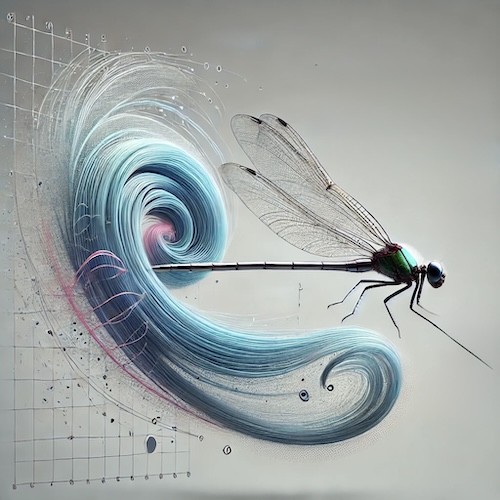
Innovative Approach to Flapping Flight Analysis Published in Physica D

Dr Lan and Dr Lai’s latest study, ‘Accelerating Flapping Flight Analysis: Reducing CFD Dependency with a Hybrid Decision Tree Approach for Swift Velocity Predictions’, has been published in Physica D: Nonlinear Phenomena. The research introduces a novel framework combining signal decomposition and decision tree algorithms, reducing computational time by up to 75% while maintaining high accuracy. Validated with damselfly data, this approach accelerates flapping flight analysis and supports the efficient design of micro air vehicles (MAVs), offering a scalable solution for future aerodynamic research.

For more information please refer to https://doi.org/10.1016/j.physd.2025.134618.