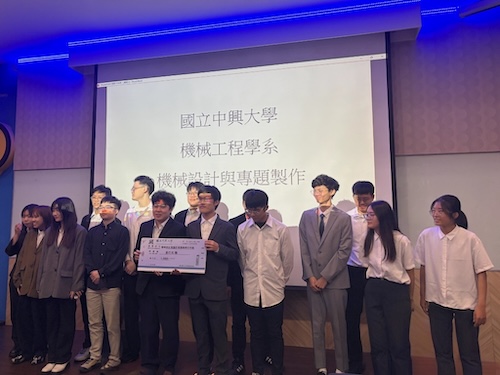
Three undergraduate students, supervised by Dr Lan, have received an honourable mention (佳作) in the Capstone Project (機械設計與製作專題) competition. Their work focused on a bio-inspired ray system, investigating the propulsion principles of ray-like motion and presenting a functional design that highlights the potential of biomimetic concepts in underwater robotic development.
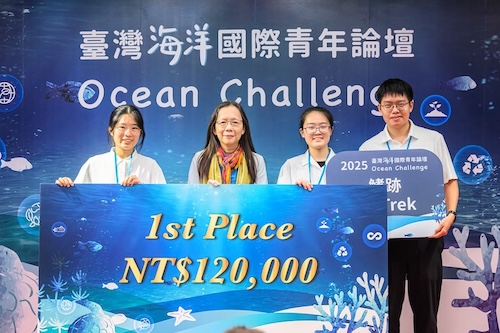
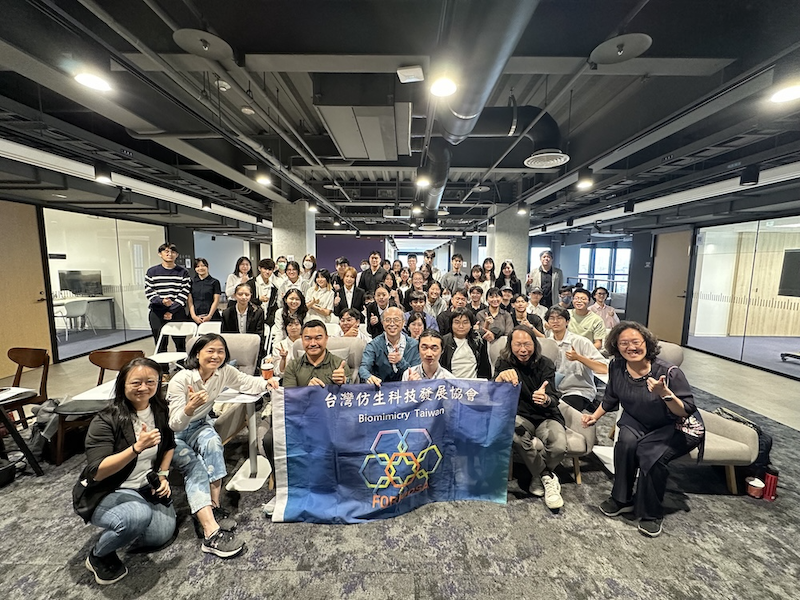
Under the guidance of Dr Lan, two student teams from the lab took part in the 2025 Bionic Design Competition (仿生設計競賽), an event showcasing nature-inspired innovation for sustainability. Among 78 entries, both teams received awards for their nature-inspired designs: one received a Merit Award for their bio-inspired stingray underwater vehicle, while the other was awarded Honourable Mention for a butterfly-inspired micro air vehicle. The competition, supported by Biomimicry Taiwan, promotes sustainable innovation rooted in natural principles, addressing global challenges from disaster resilience to environmental health.
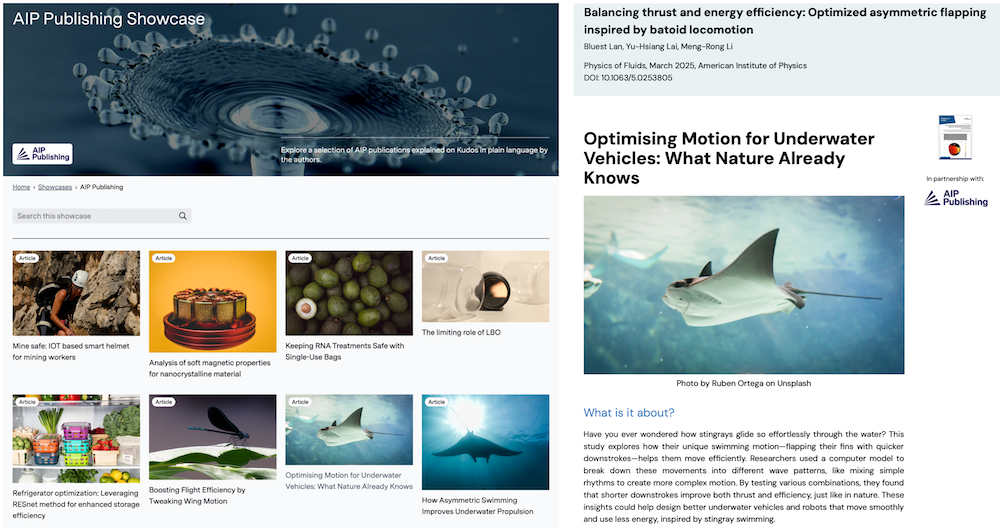
Dr Lan and his research team have been recognised by the American Institute of Physics (AIP), with their latest study selected as a feature article on Kudos’ Showcase platform. The research, titled ‘Balancing Thrust and Energy Efficiency: Optimised Asymmetric Flapping Inspired by Batoid Locomotion’, explores how the unique swimming motion of stingrays can inspire more efficient designs for underwater vehicles.
By using advanced computer simulations, the team discovered that shorter, quicker downstrokes—similar to how stingrays naturally move—enhance thrust while reducing energy consumption. These findings could lead to the development of underwater vehicles and robots that move more efficiently, with potential applications in marine exploration and environmental monitoring.
Currently, Dr Lan and his team have three articles featured on the AIP Publishing Showcase homepage, highlighting their contributions to nature-inspired scientific research.
Dr Lan, Dr Lai and their team have published a study in Physics of Fluids exploring how stingray-like asymmetric flapping enhances underwater propulsion. Using a NACA 0012 hydrofoil at a Reynolds number of 10,000 and NSGA-II optimisation, they identified six optimal motion patterns with brief downstrokes. Their findings reveal how harmonic tuning influences vortex dynamics, closely resembling natural swimming. This research provides key insights for designing efficient biomimetic aquatic robots, advancing underwater propulsion technology.
A big congratulations to Dr Lai’s team and Dr Lan on the successful publication of their groundbreaking research in Physics of Fluids! Their study explores how manta-like swimming dynamics, specifically asymmetric motion parameters, can greatly enhance the efficiency of underwater unmanned vehicles. By investigating the effects of varying angles of attack and stroke duration, the research provides key insights into maximising thrust and propulsion efficiency. This work not only advances our understanding of aquatic biomechanics but also paves the way for innovative designs in biomimetic underwater technologies. Well done to the team on this impressive achievement!